Practice. Progress.
Performance.
Exceptional Undergraduate Tutors · Personalized Academic Support · Measurable Student Progress
At Mikael Davis Academy, we believe academic achievement is not simply the result of ability. It is the product of effective instruction, consistent practice, meaningful feedback, and access to educational opportunities.
Our Academic Tutoring & Student Success Program connects elementary, middle, and high school students with carefully selected undergraduate tutors from four distinguished Hampton Roads universities: Hampton University, Christopher Newport University, Norfolk State University, and Old Dominion University.

Practice
Structured weekly instruction, matched to the skill in front of them.

Progress
Frequent checks for understanding, documented and reported to families.
An evidence-based approach to academic success
Research consistently demonstrates that well-designed tutoring can significantly improve student achievement. A comprehensive meta-analysis by Nickow, Oreopoulos, and Quan (2020), examining 96 randomized evaluations, found that tutoring programs produced substantial positive effects on student learning, with particularly strong results when tutoring was delivered consistently and with sufficient instructional structure.
The U.S. Department of Education's What Works Clearinghouse also identifies instructional practices such as systematic instruction, mathematical problem-solving strategies, and targeted reading interventions as important components of effective academic support. Its guidance emphasizes precise mathematical language and concrete or visual representations as strongly supported practices, while the Institute of Education Sciences' intervention guidance stresses screening and the monitoring of student progress.
Mikael Davis Academy incorporates these principles through individualized academic assessments, structured tutoring plans, guided practice, formative assessment, progress monitoring, and regular communication with students and families.

Structured, not improvised
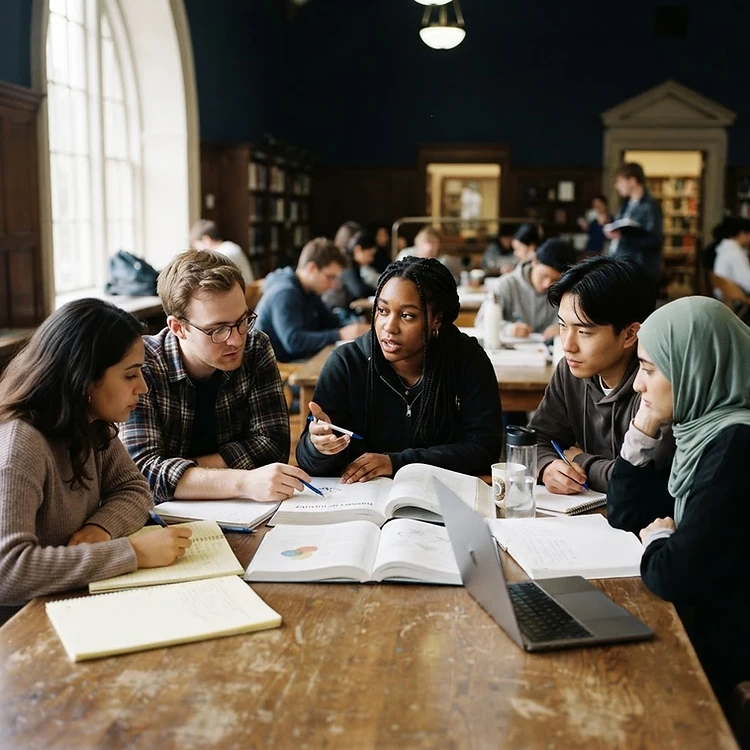
Every session follows a plan built from a diagnostic, not from whatever the student happens to bring.
A commitment to accuracy
We do not claim independently verified outcomes on the strength of other researchers' findings. Undergraduate selectivity and instructional structure are indicators of program capacity, not proof of effectiveness. We will report our own student achievement results only once we have collected and evaluated them.
One cycle, repeated until the work is independent
We translate the research into a standard tutoring cycle used in every subject and at every grade level. It is the same instructional sequence our tutors are trained and certified to deliver.
Initial diagnostic assessment
A short, purposeful probe establishes what the student can do independently, where understanding breaks down, and what instruction should target first.
Individualized learning objectives
The diagnostic becomes a written plan: the specific skills to be taught, in what order, and what the student will be able to do when the work is complete.
Structured weekly instruction
Sessions are taught, not supervised. Each one opens with review, moves through explicit instruction and guided practice, and closes with independent work.
Frequent checks for understanding
Tutors verify understanding during the session rather than assuming it, adjusting the next lesson based on what the student demonstrates.
Monthly progress reports
Families receive a written account of attendance, skills mastered, continued areas of need, and the plan for the month ahead.
Five subjects, three grade bands
Students receive individualized or small-group academic assistance designed to reinforce classroom instruction, address learning gaps, strengthen confidence, and prepare students for increasingly demanding academic expectations.
Mathematics
Number sense and computation through Pre-Algebra, Algebra I, and Geometry readiness.
English Language Arts
Reading comprehension, vocabulary, writing, and the craft of a clear sentence and paragraph.
Science
Biology, chemistry, and physical science taught through explanation, application, and laboratory reasoning.
Social Studies
History, government, and geography, with an emphasis on reading sources and building an argument.
World Languages
Foundational through intermediate Spanish and French, with grammar and conversation practice.
Elementary
Grades K–5Reading foundations, number sense, and the habits of attention that make later schoolwork possible.
Middle School
Grades 6–8Pre-Algebra, writing across subjects, and study routines before the demands of high school arrive.
High School
Grades 9–12Algebra, sciences, composition, and world languages, with support for course credit and college readiness.
Selected undergraduates, trained before they are assigned
Tutors are recruited from four Hampton Roads universities and prepared for the specific work of academic instruction. Selection is deliberate because the value of tutoring depends on the quality of the person delivering it.
The four universities
The selection sequence
- 01
A written application, reviewed for academic preparation and subject readiness.
- 02
An interview covering instructional judgment and responsibility with minors.
- 03
A teaching demonstration, observed and evaluated against a published rubric.
- 04
Required screening before any assignment with a student.
- 05
The twenty-lesson Academic Tutor Training & Certification course, closed by a module assessment and a final portfolio.
From undergraduate to certified tutor, in six gates
We hire undergraduates from Hampton, Christopher Newport, Norfolk State, and Old Dominion — and then we train them before either of us meets a student. Completing the pathway earns a credential, documented experience, and the responsibility of someone's academic year.
Apply
A written application: institution, year, major, subjects you can teach, and the grades you want to work with.
Screening
We review academic preparation and subject readiness against the courses you would actually tutor.
Interview
A conversation about instructional judgment, safeguarding, and responsibility for someone else's child.
Teaching demonstration
You teach a short lesson to an observer and are evaluated against a published rubric — not a friendly vote.
Training & certification
Twenty lessons in diagnostic assessment, explicit instruction, scaffolding, and progress documentation, closed by module assessments.
Assignment
Matched to a subject, grade band, and city — then observed, coached, and asked to document what changed for the student.
Why the gates exist
Deliberate practice
Tutors rehearse the specific move — modeling a fraction, running a error analysis — rather than tutoring in general.
Explicit instruction
The training sequence mirrors the method tutors use with students: show it, do it together, then release it.
Formative assessment
Every gate produces evidence. A demonstration is scored; module assessments are passed; progress is reported to families.
Experienced educational leadership
Developed under three decades of practice
The program is developed under the leadership of Mikael Davis, Founder of Mikael Davis Academy and Dean of Student Achievement at Hampton University.
With more than three decades of experience supporting student achievement, Mr. Davis has supervised and directed educational initiatives spanning both K–12 and postsecondary settings. He leads the program's academic design, its tutor training, and the standards by which student progress is judged.
That experience is the reason the program is built around instruction rather than supervision. A tutor who has been trained to diagnose, teach, check for understanding, and document progress is doing academic work. A tutor who is simply present while a student works is not.


The standard
Instruction designed by someone accountable for student achievement, not assembled by a staffing agency.
Geographically distributed across Hampton Roads
Families should not have to cross the region for academic support. Sessions are held in public, observable settings in the cities below, scheduled by appointment around the school day.
Newport News
Central to the lower Peninsula, with university and library sites.
Hampton
Serving Hampton University families and the surrounding neighborhoods.
Norfolk
Norfolk State and Old Dominion students tutoring across the city.
Portsmouth
Across the river, on the same schedule and the same instructional standard.
Approved settings
Every session is held in a public, observable space where a third party could see the work taking place. Meeting sites are confirmed with the family before the first session.
Two ways to get tutorial support
Family Foundations + Tutorial Support
$199/mo
four 60-minute sessions monthly
- Everything in Family Foundations PLUS
- Four 60-minute individual tutoring sessions
- Diagnostic assessment and a written tutoring plan
- Monthly progress reports for the family
Individual Tutoring Sessions
$45/hour
subject to availability
- 60-minute individual sessions
- Any subject in the program
- No subscription required
- Session notes after each meeting
Pricing shown is proposed launch pricing, subject to approval.
Begin with a diagnostic, not a guess
Request tutoring and we will discuss your child's needs, the subject in question, and the site and time that fit your family.
Request TutoringMikael Davis Academy · Practice. Progress. Performance.

