Private Practice
§ Digital SolutionsMikael Davis Consulting

A website should argue as well as you do.

We don't simply build websites. We build digital systems that help organizations serve their clients, streamline operations, measure outcomes, and grow. The website is the technology. The work is designing the system behind it.

Published starting prices · Written scope before work begins

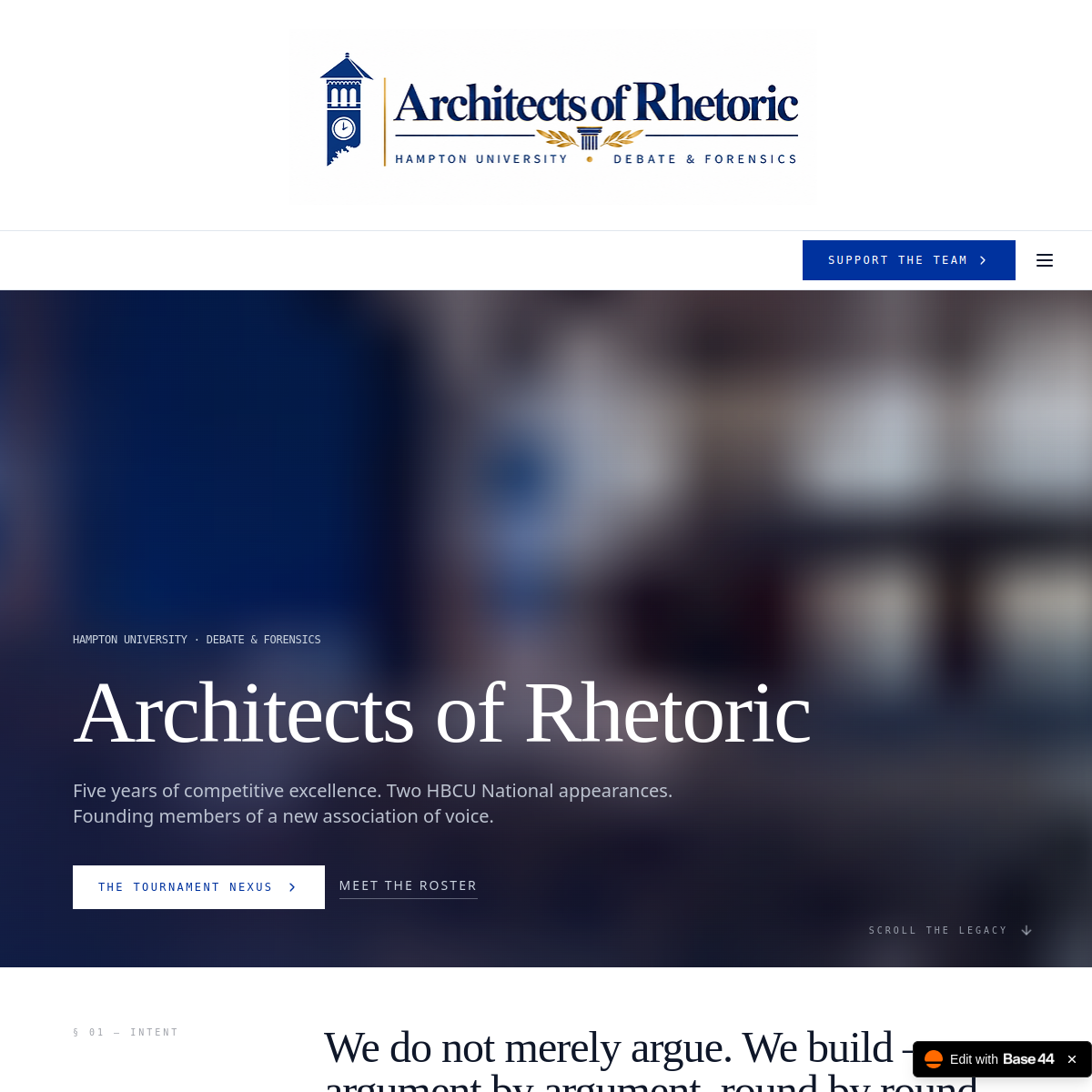
architectsofrhetoric.com
Homepage of Architects of Rhetoric, the Hampton University Debate and Forensics program site: a navy editorial hero with its numbered navigation above the opening of a chaptered five-year history.
Recent build · Hampton University Debate & Forensics
§ 01The Work

More than a brochure.

Most organizations are not short of a website. They are short of a way to run the work behind it — the applications, the roster, the invoices, the outcomes a funder asks about. That is the gap this practice works in: organizational expertise first, then the technology that carries it.

Organizations do not need another attractive website. They need the operation underneath it to work.

01

Programs & participants

Applications, eligibility, cohorts, and progress — kept in one place instead of eleven spreadsheets.

  • ›Applications with eligibility rules
  • ›Participant and cohort records
  • ›Progress and completion tracking
02

Client communication

Intake, reminders, and follow-up that reach people where they already are, without a staff member retyping it.

  • ›Intake and inquiry forms
  • ›Automated email sequences
  • ›A portal clients can return to
03

Payments & revenue

Registration fees, donations, subscriptions, and vouchers that reconcile — and that revoke cleanly when they should.

  • ›Checkout, invoicing, and subscriptions
  • ›Donations and sponsorships
  • ›Entitlements and access control
04

Outcomes & reporting

The numbers your board and funders ask for, produced by the system rather than rebuilt by hand each quarter.

  • ›Outcome and participation reports
  • ›Records you can export
  • ›Dashboards for staff and partners
05

Operations

The recurring administrative work, moved out of email threads and into a workflow that leaves a record.

  • ›Admin roles and data access rules
  • ›Assignments and approvals
  • ›Digests and scheduled reminders

Not sure which of these you need?

One call is enough to name the problem and what it would take to solve it.

Book a scope call
§ 02The Offers

Three ways to start

Each offer is a starting price for a defined scope — not a deposit, and not a placeholder. The proposal you sign states exactly what is included and what is not.

Essential

$999

starting price · Up to 5 pages · 3–4 weeks

A professional web presence with basic inquiry functionality — credible, fast, and yours to maintain.

  • Discovery call and written scope
  • Design system and up to 5 pages
  • Responsive build, phone through desktop
  • Inquiry form routed to your inbox
  • Search metadata, sitemap, and analytics
  • Launch, domain, and DNS setup
  • 30 days of post-launch support
  • Content archive or blog
  • Payments or client records

Small nonprofits, new practices, and single-program organizations.

Start the Essential
ProfessionalMost chosen

$2,499

starting price · Up to 10 pages · 5–7 weeks

The expanded site with the systems that generate and keep clients: CRM, scheduling, or payment integration.

  • Everything in Essential
  • Up to 10 pages, including a content archive
  • CRM setup — contacts, pipeline, follow-up
  • Scheduling or online payment integration
  • Email capture with a welcome sequence
  • Structured data and conversion tracking
  • 60 days of post-launch support
  • Authenticated client portal
  • Custom program records

Growing nonprofits, training providers, and established service businesses.

Start the Professional
Organizational

$4,999

starting price · Quoted by requirements · 8–14 weeks

A custom portal, dashboard, or organizational application — the site as operational infrastructure.

  • Everything in Professional
  • Authenticated portal for staff or participants
  • Program and participant records
  • Dashboards and outcome reporting
  • Registration, payments, or entitlements
  • Admin roles and data access rules
  • Training, documentation, and admin transfer
  • 90 days of post-launch support
  • Platform and third-party subscription costs
  • New features after the support window

Nonprofits with programs to run, educational providers, and associations.

Start the Organizational

Starting prices for a defined scope, with the client supplying content. A five-page professional site with content in hand comes in at $1,299. A membership portal, learning platform, or CRM-enabled application does not — those involve more development, testing, training, and support.

Ongoing support

Monthly · cancel with 30 days' notice
Basic support$99per month

The site kept current, monitored, and backed up — with a named response window.

  • Up to 2 hours of updates each month
  • Uptime and form-delivery monitoring
  • Backups and security patches
  • Email support, two-business-day response
Advanced management$299per month

Basic support plus the ongoing read of what the numbers mean and what to change next.

  • Up to 6 hours of updates each month
  • Search and content optimization
  • Monthly analytics report with a written read
  • Quarterly planning call
  • Email support, one-business-day response

Platform subscriptions, third-party services, and extensive custom integrations are priced separately and billed to you directly, at cost.

§ 03What Projects Run

Ranges, published

Most firms ask for a call before they will name a number. These ranges cover the scope people actually buy — the written proposal narrows one of them to a fixed price.

Landing page or single-page site$499–$799
Small business site, up to 5 pages$999–$1,499
Nonprofit or educational organization site$1,499–$3,499
Professional site, 6–10 pages$1,999–$2,999
Site with CRM, scheduling, or payment integrations$2,999–$5,999
Custom portal, dashboard, or organizational application$4,999–$9,999+

Prices in USD. Platform subscriptions, third-party services, and extensive custom integrations are quoted separately. Rush timelines add 25%.

Place your project
§ 04Who This Is For

Where the advantage is

Organizations whose operations this practice already understands. Small business sites are welcome, but they are the secondary market — the strongest fit is a program with clients to serve and outcomes to report.

First priorityStrongest fit

Nonprofits & community organizations

Donor portals, event registration, volunteer tracking, program dashboards, and outcome reporting.

Grant writing and program evaluation are the same discipline as the system that reports on them — the logic is designed once, then built.

Second priorityHigh-value specialization

Educational & training organizations

Registration, participant tracking, course delivery, and reporting for TRIO programs, tutoring companies, workforce training providers, and educational nonprofits.

A twenty-course learning platform and two federally funded TRIO program sites are already in production.

Third prioritySecondary market

Service-based small businesses

Lead generation, appointments, CRM functionality, and online payments — not simply a five-page website.

Best suited to consultants, coaches, professional practices, and established local service companies.

Engagements start with independent training providers and smaller nonprofits. A university-wide student-record system needs privacy, access-control, and compliance review before deployment — that review is part of the quote, not an afterthought.

§ 05Case Studies

Three systems in production

Each one began as an organizational problem, not a design brief. The screenshots are the live sites — follow any of them through to read the work itself.

mikaeldavis.com
A Mikael Davis Academy landing page: a serif headline for parents and families, a checklist of scholarship mistakes, and a free-guide signup panel.

Learning platform · Educational companies and training providers

Mikael Davis Academy

The problem

Twenty course pathways, digital products, institutional licenses, and a referral program — all sold and delivered by one practitioner, with no reliable way to know who had access to what.

The solution

A marketing site and a student portal on one platform: checkout grants access, the portal tracks progress, and institutional partners manage their own seats.

What was built
  • Twenty course pathways with progress and assessments
  • Checkout, entitlements, and voucher redemption
  • Institutional licensing portal with seat management and quoting
  • Community, homework review, and a Personal Digital Assistant
  • Email, content, and analytics systems

In production: paid enrollment, self-serve institutional seats, and course delivery running without manual administration.

Visit mikaeldavis.com
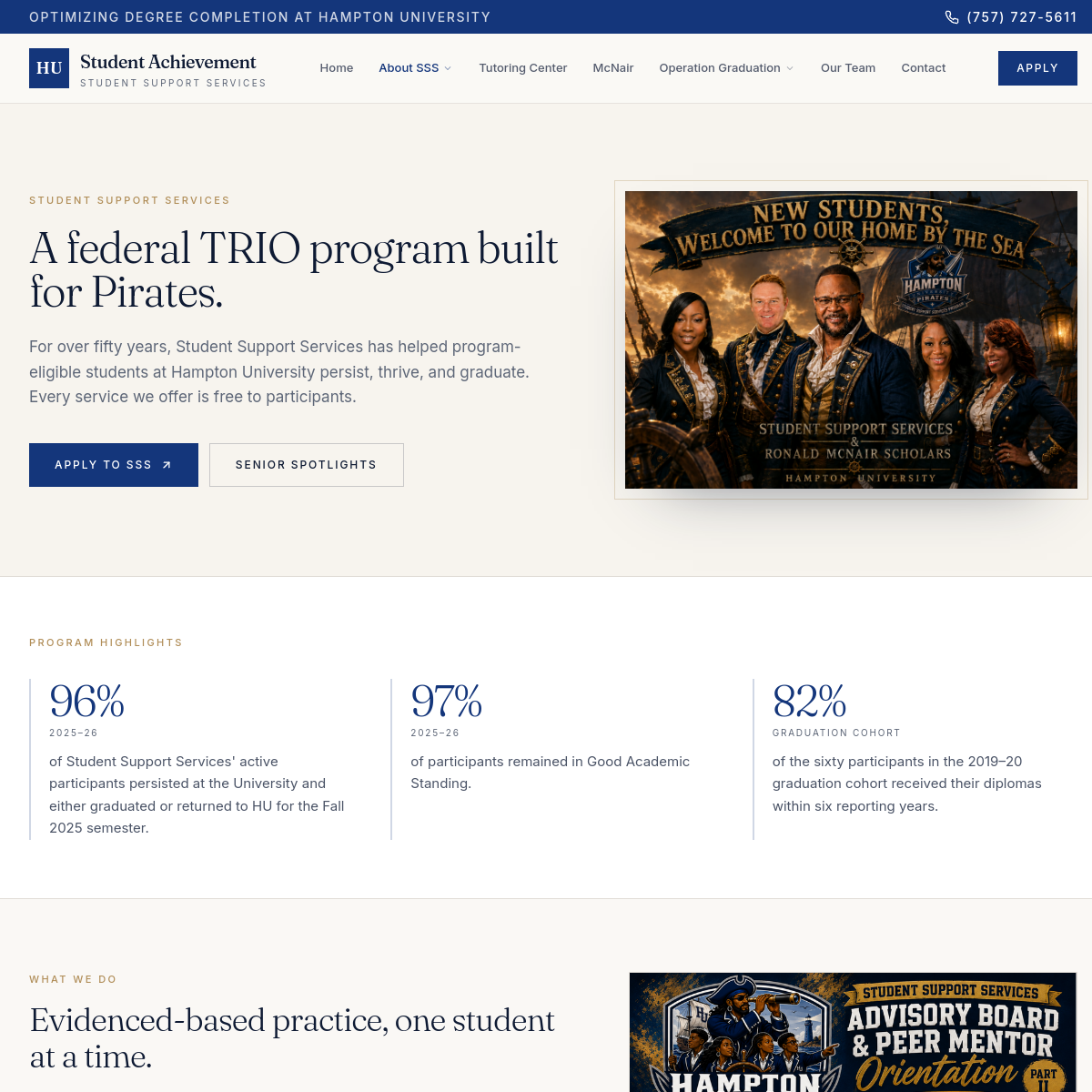
hustudentachievement.org/sss
The Student Support Services page of Hampton University Student Achievement, with the TRIO program's persistence and graduation rates presented as the argument.

Institutional site · Educational institutions and nonprofits

HU Student Achievement

The problem

Two federally funded TRIO programs under one roof, each with its own eligibility rules and paper application, and outcome data that lived in slides rather than on the site.

The solution

One site carrying both programs, with the outcome data as the argument and a rolling application a student can finish in five minutes.

What was built
  • Program pages for SSS, McNair, tutoring, and Operation Graduation
  • Rolling digital application with eligibility verification
  • Outcome statistics presented as the argument
  • Senior spotlights drawn from a managed content collection
  • Advisor contact paths for students and families

In production: applications arrive through the site and are reviewed in one place instead of by email.

Visit hustudentachievement.org
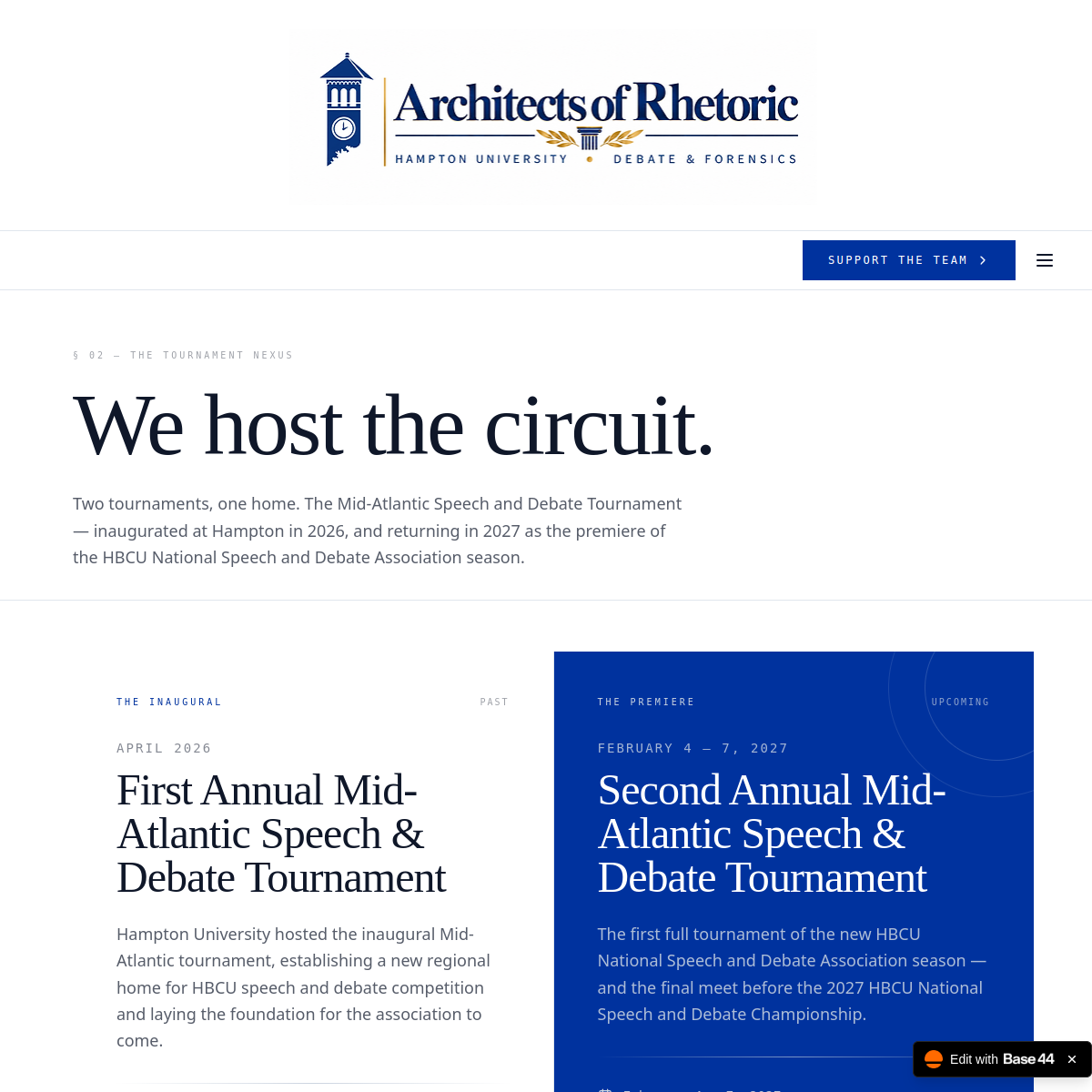
architectsofrhetoric.com
The Tournament Nexus page of Architects of Rhetoric: the Hampton University Debate and Forensics hosting hub, with the season's schedule and judge training.

Program site · Educational programs and associations

Architects of Rhetoric

The problem

A five-year debate program with a national record, an annual tournament, and no home for any of it — while coaches and judges needed the season's schedule and training material.

The solution

A program site told as a chaptered narrative, with a tournament hub that carries the season and the people running it.

What was built
  • Editorial history written as a chaptered timeline
  • Tournament hub with the season's hosting schedule
  • Team roster and judge training pages
  • Endowment and support pathway
  • Brand system built for a program with no budget

In production: the season, the roster, and the history are maintained by the program itself.

Visit architectsofrhetoric.com
§ 06Technical Specifications

What every build carries

These are the standards written into the contract, not aspirations. If an offer above omits one of them, that is because the scope does not reach it — say so and it can be added.

Performance targets

Lighthouse scores of 90+ for performance, accessibility, best practices, and SEO, with Core Web Vitals in the green — LCP under 2.5s, CLS under 0.1, INP under 200ms.

Responsive through 360px

Every page is designed and tested from a phone at 360px up to a 1440px desktop, including safe-area handling and 44px touch targets.

Accessibility — WCAG 2.1 AA

Semantic landmarks, keyboard navigation, visible focus states, labeled forms, alt text, and contrast ratios that hold in light and dark.

Search foundation

Unique metadata per page, canonical URLs, Open Graph and social cards, sitemap.xml, robots.txt, and 301 mapping from any old site.

Structured data

Organization, Course, FAQ, and breadcrumb schema marked up so search engines and AI answer engines read the site correctly.

Content you can edit

Copy, images, posts, and program details live in an editor your staff can use — no developer needed for routine changes.

Forms and records

Validated forms with spam protection, records stored in a database you own, email notifications, and CSV export.

Security and roles

SSL, role-based admin access, server-enforced data rules, secrets kept out of the browser, and regular backups.

Integrations

Payments, email, calendars, CRM, and LMS connections — wired to services you already pay for rather than replaced.

Analytics and reporting

Google Analytics 4, Search Console, and conversion events, plus a short monthly read of what the numbers mean.

Handoff and training

A recorded walkthrough, a written admin guide, and the asset library — so the system outlives the engagement.

Platform and stack

React on a managed deployment — no plugin maintenance, no version upgrades, and no server for you to administer.

Performance targets are measured on the delivered build with Google Lighthouse on throttled mobile. Accessibility is reviewed against WCAG 2.1 AA; a formal third-party audit, where required, is quoted separately.


§ 07The Engagement

How the work is run

Six phases, each closing on something you approve. An Essential build finishes in three to four weeks; Professional and Organizational engagements run longer, and the schedule is fixed in writing before work begins.

01

Discovery

One call, then a written brief: who the organization serves, what the system must accomplish, and what already exists. Content, accounts, and current tools are audited before anything is designed.

02

Architecture

Sitemap, page-by-page wireframes, the data the system will hold, and the copy outline. You approve the structure before a single visual decision is made.

03

Design

The visual system and the pages in scope, at mobile and desktop. Two rounds of revision are included; further rounds are quoted.

04

Build

Responsive development, forms, records, integrations, and content loading — with a staging link you can review as the work lands.

05

Launch

Domain and DNS, analytics, redirects, and a final accessibility, performance, and payment-flow pass. Nothing ships until the QA list is clear.

06

Aftercare

Training, documentation, and the support window included in your package. Ongoing support continues on a defined monthly plan.

§ 08Scope & Terms

What is included — and what is not

Every proposal states the boundary in writing, so nothing arrives as a surprise invoice later.

Included
  • Consultation, strategy, design, and build as scoped in writing
  • Two rounds of revision per phase
  • Staging link for review throughout the build
  • Launch, DNS, analytics, and search configuration
  • Training session and written handoff
Not included
  • Platform subscription and third-party services — billed to you directly, at cost
  • Advertising spend and paid media
  • Professional photography and video production
  • Long-form copywriting beyond the outline (available as an add-on)
  • Data migration from a legacy system (quoted separately)
  • New features after the included support window

Hosting, domains, and third-party subscriptions are billed to you directly, at cost — never marked up.

Add-ons, priced individually

Copywriting

Written from your interviews and source material, in your voice.

$185 per page

Additional pages

Designed and built to the same system, within the original scope.

$275 per page

Identity and logo

Wordmark, mark, and a short usage guide.

From $950

Email and nurture series

Segmented sequences written, designed, and wired to your funnel.

From $600

Data migration

Existing records and content moved in, cleaned, and verified.

From $500

Training and documentation

Recorded sessions and a written guide for your team.

From $400
Payment terms
  • ›50% to begin, 50% at launch
  • ›Institutions may request invoicing against a purchase order
  • ›Timelines run from receipt of content and approvals
  • ›Rush timelines add 25%

Prices are in USD and held for 60 days from the date of a written proposal.

Ownership & running costs

Settled before the contract

Who owns the application, who pays for the platform, and what happens after the support window — written down, not discovered later.

You own the application

Every build is delivered into a workspace your organization controls. Administrative ownership transfers to you at handoff, in writing.

Platform costs are yours, at cost

The platform subscription and any integration or credit usage are billed to your organization directly, sized to the build. No markup — and no promise that a sophisticated application runs on the cheapest plan.

Support is defined, not open-ended

A support plan states the hours, monitoring, and response window it covers. New features are quoted as new scope, so the monthly figure stays predictable.

Production systems get tested

Authentication, data access, backups, integrations, and payment flows are tested before launch. AI-assisted development speeds construction; it does not remove the obligation to validate a live system.

Custom Scope · No Obligation

Tell us what the organization needs to do

Send the work that has to happen — the programs, the clients, the payments, the reports — plus the deadline. You will get a written scope with a fixed price, or an honest answer that the work is not the right fit.

Or write directly · info@mikaeldavis.com