













§ 06The Journal

Notes and Lessons from MIKAEL

Field notes on college access, scholarships, financial aid, and the AMCAS — distilled from 30+ years of evidence-based practice. Published on TeachClub; updated regularly.

Latest Article
FAFSA Deadlines 2027: The Proven Timeline to Maximize Your Financial Aid
College Access
October 26, 2026 5 min

FAFSA Deadlines 2027: The Proven Timeline to Maximize Your Financial Aid

The FAFSA is open for the 2027–28 school year. Federal Student Aid announced that families could start submitting the form on September 23, 2026, earlier than the customary October 1 opening. If you’re applying to college for fall 2027, the most important deadline is the one that arrives first: it might be your college’s priority date, your state’s deadline, or a scholarship deadline tied to the FAFSA. Some state and institutional funds are limited, so filing early can improve your chance of being considered.

Inside the Workforce Gateway: A New Video Series for Every Route After High School
Career & Workforce
October 16, 2026 5 min

Inside the Workforce Gateway: A New Video Series for Every Route After High School

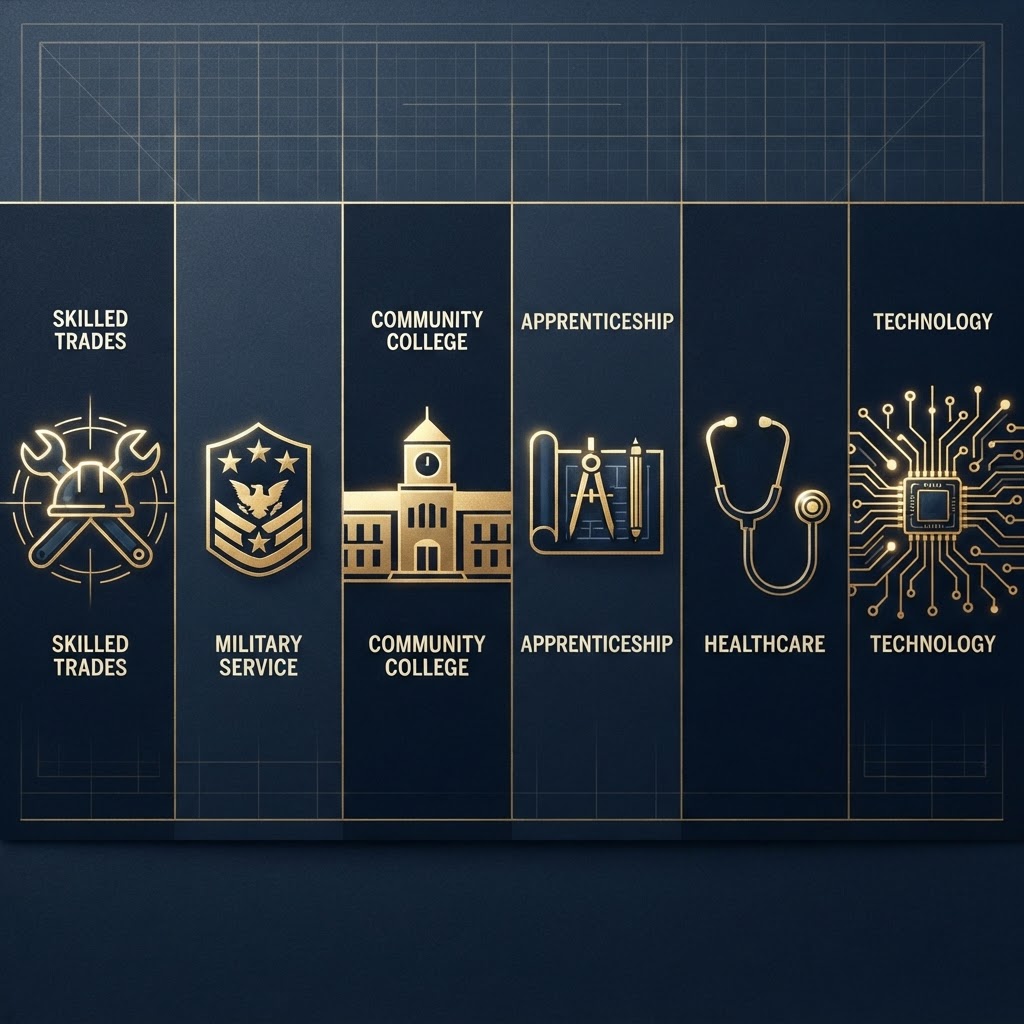
Not every road leads through a four-year degree. The Workforce Gateway maps six major postsecondary routes — university, community college, skilled trades, apprenticeship, military service, and direct-to-work — into one structured 12-week course. Now paired with a new video series that walks you through every pathway.

Institutional Licenses for TRIO Upward Bound, ETS, GEAR UP, and KIPP Programs
Institutional
October 16, 2026 6 min

Institutional Licenses for TRIO Upward Bound, ETS, GEAR UP, and KIPP Programs

A college-readiness framework built for first-generation and Pell-eligible students — now available as a 12-month institutional license at $3,499 for TRIO Upward Bound, Educational Talent Search, GEAR UP, and KIPP programs. Customized pricing for large institutional programs starts at $5,499.

Trade School vs College: The Ultimate Guide to Choosing Your Best Path
College Access
October 26, 2026 9 min

Trade School vs College: The Ultimate Guide to Choosing Your Best Path

Trade school or college? Compare cost, time, earnings, and learning style side by side to choose the training route that fits your goals — and learn why financial aid applies to both paths.

Trick or Treat? A Different Way to Think About College Planning
College Access
October 30, 2026 7 min

Trick or Treat? A Different Way to Think About College Planning

That haunted-looking house was full of the best candy on the block. College planning works the same way: the doors families are afraid to open hide the biggest opportunities.

How to Get Scholarships in 2027: 7 Mistakes That Quietly Cost Families Money (and How to Fix Them)
Scholarships & Financial Aid
November 6, 2026 8 min

How to Get Scholarships in 2027: 7 Mistakes That Quietly Cost Families Money (and How to Fix Them)

The families who win scholarships build a plan, not a pile of applications. Here are the seven mistakes that quietly cost families money in 2027 — and the fix for each one.

The Legal Gateway: How to Decide if Law School Is Worth It Before You Take the LSAT
Career Pathways
November 5, 2026 9 min

The Legal Gateway: How to Decide if Law School Is Worth It Before You Take the LSAT

Law school is an instrument, not an identity. Before the LSAT and before the debt, decide what the degree needs to do for you — then compare cost, outcomes, and alternatives with evidence.

The Nursing Gateway: Choosing the ADN or BSN Route Without Overpaying for It
Career Pathways
November 7, 2026 9 min

The Nursing Gateway: Choosing the ADN or BSN Route Without Overpaying for It

ADN or BSN? Both can lead to RN licensure — but only one verified route fits your finances and timeline. Here is how to compare the full journey before you commit.

The Engineering & STEM Gateway: Pick the Discipline First, Then Let the Degree Follow
Career Pathways
November 9, 2026 9 min

The Engineering & STEM Gateway: Pick the Discipline First, Then Let the Degree Follow

An engineering degree is a major commitment. Start with the problems you want to solve, check your math readiness, verify ABET accreditation on the exact program, and compare the full cost — then let the degree follow.

The Education & Teaching Gateway: A Career Plan That Survives Year Five
Career Pathways
November 11, 2026 10 min

The Education & Teaching Gateway: A Career Plan That Survives Year Five

Teaching can be meaningful work — if you choose your licensure route, grade band, and district with evidence. Here is how to build a classroom career that can adapt and sustain you past year five.

The Public Service & Government Gateway: Learning to Read the System That Hires
Career Pathways
November 13, 2026 9 min

The Public Service & Government Gateway: Learning to Read the System That Hires

Government hiring runs on rules most families have never been taught: competitive vs excepted service, the federal resume, qualification standards, pay grades, and PSLF. Here is how to read the system before you invest in a credential.

The Skilled-Trades Leadership Gateway: From Apprenticeship to Ownership
Career Pathways
November 15, 2026 9 min

The Skilled-Trades Leadership Gateway: From Apprenticeship to Ownership

"Not college" is not a career plan. A registered apprenticeship is a paid beginning, not a ceiling — and the trades are an ownership track: apprentice to journeyman to crew leader to contractor to owner.

Democracy in Action: The 2026 Midterm Elections and the Next Generation of Public Servants
Civic Education
November 5, 2026 11 min

Democracy in Action: The 2026 Midterm Elections and the Next Generation of Public Servants

The 2026 midterms are a living classroom in constitutional government. What the results teach students about representation, divided government, media literacy — and how civic experience builds the leadership capital that colleges notice.

Announcing the Professional Mentoring Network
Consulting
September 21, 2026 4 min

Announcing the Professional Mentoring Network

Direct Engagement clients now receive access to a year-round series of monthly sessions with terminal-degree professionals — physicians, pharmacists, scientists, attorneys, and PhD candidates from the nation's leading institutions. Students enrolled in The AMCAS Blueprint and The Graduate School Preparation Blueprint receive invitations with their subscriptions.

Introducing Mikael Davis Academy: A New Era of Evidence-Based College Access
College Access
September 19, 2026 6 min

Introducing Mikael Davis Academy: A New Era of Evidence-Based College Access

After 30 years and $38M+ in aid secured, Mikael Davis Consulting is evolving. The new Mikael Davis Academy brings the full evidence-based practice online — with self-paced courses, two digital e-book/audiobook bundles, and a personalized Digital Assistant accessible to every family.

What Is the AMCAS Application? A Beginner's Complete Overview
Medical School
September 12, 2026 5 min

What Is the AMCAS Application? A Beginner's Complete Overview

Most pre-med students don't realize AMCAS is the centralized gateway to nearly every MD program in the US — and misunderstanding its structure early leads to costly, hard-to-fix mistakes. Here's what you actually need to know before you touch the application.

First-Generation College Student? Here's Exactly Where to Start
College Access
September 12, 2026 5 min

First-Generation College Student? Here's Exactly Where to Start

When no one in your family has been through the college application process, it's hard to know what you don't know. These five foundational steps will get you moving in the right direction — before anything else.

How to Read a College Financial Aid Award Letter (Without Getting Tricked)
Financial Aid
September 12, 2026 4 min

How to Read a College Financial Aid Award Letter (Without Getting Tricked)

That thick financial aid offer looks generous — until you realize half of it is loans you have to repay. Here's exactly how to decode what a college is really offering you.

Common App vs. Coalition App: Which One Should You Use?
Applications
September 12, 2026 4 min

Common App vs. Coalition App: Which One Should You Use?

Picking the wrong application platform can quietly shrink your college list before you write a single word. Here's exactly how Common App and Coalition App differ — and how to choose the right one from day one.

Early Decision vs. Early Action: Which One Is Right for You?
Applications
September 10, 2026 4 min

Early Decision vs. Early Action: Which One Is Right for You?

Early Decision and Early Action both get your application in front of admissions committees sooner — but one could cost you serious financial aid leverage. Here's how to tell which strategy is the right move for your family.

What Is the FAFSA EFC (SAI) — and Why It Determines How Much College Will Actually Cost You
Financial Aid
September 10, 2026 4 min

What Is the FAFSA EFC (SAI) — and Why It Determines How Much College Will Actually Cost You

Most families fixate on a college's sticker price — but the number that actually determines what you'll pay is hiding inside your FAFSA. Here's what the Student Aid Index is, how it's calculated, and why understanding it changes everything about your college search.

How to Write a Scholarship Essay That Wins: A Beginner's Step-by-Step Guide
Scholarships
September 10, 2026 4 min

How to Write a Scholarship Essay That Wins: A Beginner's Step-by-Step Guide

Most scholarship essays lose in the first paragraph — not because students can't write, but because they're telling the wrong story. Here's how to find the right one and structure it so reviewers remember you.

Need-Based Aid vs. Merit Scholarships: What's the Difference — and How Do You Get Both?
Financial Aid
September 10, 2026 5 min

Need-Based Aid vs. Merit Scholarships: What's the Difference — and How Do You Get Both?

Most students chase one type of college money and leave the other on the table. Here's how need-based aid and merit scholarships actually work — and how to position yourself to stack both.

The Beginner's Roadmap to Winning Scholarships in High School
Scholarships
September 8, 2026 5 min

The Beginner's Roadmap to Winning Scholarships in High School

Most students don't start thinking about scholarships until senior year — and that's exactly why they leave money on the table. Here's the grade-by-grade strategy that puts you ahead of the competition from day one.

How to Build a College Application That Actually Stands Out (Step-by-Step)
Applications
September 8, 2026 4 min

How to Build a College Application That Actually Stands Out (Step-by-Step)

A strong college application is more than grades and test scores — it's a cohesive story told across every section. Here's how to build one that admissions readers actually remember.

FAFSA vs. CSS Profile: What's the Difference and Which One Do You Need?
Financial Aid
September 8, 2026 4 min

FAFSA vs. CSS Profile: What's the Difference and Which One Do You Need?

Many families file one form and skip the other — and it costs them thousands. Here's exactly what the FAFSA and CSS Profile each do, who requires both, and how to tackle them without missing a deadline.

5 Scholarship Application Mistakes That Are Costing You Free Money
Scholarships
September 8, 2026 4 min

5 Scholarship Application Mistakes That Are Costing You Free Money

Generic essays, missed deadlines, and overlooked local awards are silently draining thousands of dollars from your financial aid package. Here's how to fix each mistake before it costs you.

MA vs. MBA vs. PhD vs. EdD vs. EdS vs. MSW vs. DPT vs. DO vs. MD: Which Graduate Degree Is Right for You?
Graduate School
September 19, 2026 8 min

MA vs. MBA vs. PhD vs. EdD vs. EdS vs. MSW vs. DPT vs. DO vs. MD: Which Graduate Degree Is Right for You?

Choosing the wrong graduate degree can cost you years of your life and hundreds of thousands of dollars. Here's a clear, field-by-field breakdown of what each degree actually prepares you to do — and how to choose the right path before you apply.

Go deeper than a blog post

The Ultimate College Access Blueprint

From the SORO Journal

More from Mikael Davis

Scholarships for First Generation College Students

Scholarships for First Generation College Students

A first-generation student can do everything right - earn strong grades, serve their community, apply to college - and still miss aid simply because no one explained where to look or how scholarship decisions are made. Scholarships for first generation college students exist because colleges, foundations, employers, and community organizations recognize that being the first in a family to pursue a four-year degree often means navigating admissions and financial aid without an inherited roadmap.

That status is meaningful, but it is not a complete application strategy by itself. The strongest results come from pairing eligibility with a clear academic direction, a documented record of involvement, and applications that show how an award will move a student toward a specific goal.

What “First Generation” Usually Means

There is no single national definition of a first-generation college student. Many scholarship programs define it as a student whose parents or legal guardians did not earn a bachelor’s degree. Others use a narrower definition, such as neither parent having attended college at all. A few programs may consider a student first generation when the parent they live with has not completed a four-year degree.

Read each scholarship’s eligibility language carefully. Do not assume that a parent’s associate degree, trade credential, military education, or college attendance automatically disqualifies you. The program’s own definition controls.

If an application asks about parental education, answer precisely. This information is not a weakness to hide. It gives reviewers context for your accomplishments and can establish eligibility for opportunities designed to expand college access.

Where to Find Scholarships for First Generation College Students

A broad online search can produce hundreds of results and very little progress. A better approach is to organize your search around institutions and communities that have a reason to invest in your education.

Start with the colleges on your list. Many institutions offer first-generation scholarships, access grants, promise programs, or awards connected to participation in a student-success program. Some awards are automatic when you apply for admission and financial aid by a priority deadline. Others require a separate scholarship application, an interview, or enrollment in a support program.

Next, ask your high school counselor, college adviser, TRIO program, GEAR UP coordinator, community-based organization, faith community, and local civic groups. Local scholarships may have smaller applicant pools than national competitions. A $500 or $1,000 award can still cover books, transportation, lab fees, or a required laptop.

Also look at scholarships tied to your intended field. A student planning to study nursing, education, engineering, business, agriculture, public service, or the arts should search through professional associations, local employers, hospitals, unions, and community foundations connected to that field. First-generation status may be one factor among several, alongside major, residency, financial need, leadership, or service.

Finally, pay close attention to scholarships connected to your family’s workplace. Employers sometimes offer awards for employees and dependents, and those programs may be less visible than large national scholarships.

Build a Search System Before Deadlines Build Pressure

Scholarship searching becomes manageable when it becomes a weekly process rather than a once-a-month emergency. Create a simple tracker with the scholarship name, award amount, eligibility requirements, deadline, materials needed, submission status, and decision date.

Prioritize applications in three categories: college-based aid with early deadlines, local awards with limited competition, and larger scholarships that fit your profile well. Do not spend every hour chasing a single high-dollar national award. Large awards are valuable, but a portfolio of smaller scholarships can reduce your costs just as effectively.

Apply early whenever possible. Early submission gives you time to correct missing documents, request recommendation letters, and resolve technical problems. It also communicates organization, which matters when an application includes optional interviews or follow-up materials.

A useful rule is to save every finished essay, resume, activity list, transcript request, and recommendation request in one clearly labeled folder. You will adapt these materials often, but you should not have to rebuild them from scratch for every application.

Tell the Story Behind Your First-Generation Status

Reviewers are not looking for a dramatic hardship narrative. They are looking for evidence that you understand your path, have taken initiative, and can use their investment well.

Your essay should connect your background to your academic and career goals. Perhaps you learned to interpret school forms for your family, helped younger siblings with homework, balanced work with advanced classes, or sought mentors when you did not know how college applications worked. Those experiences can demonstrate responsibility, persistence, resourcefulness, and leadership.

The key is specificity. Instead of writing, “Being first generation made me work hard,” show what working hard looked like. Explain the choice you made, the obstacle you addressed, and the result. A student who organized a study group, translated financial aid information for a parent, or continued a demanding course load while working part-time has concrete evidence of readiness.

Avoid making the essay only about difficulty. Scholarship committees want to see forward motion. End with the education you plan to pursue, the work you hope to do, and the people or communities you intend to serve.

Strengthen the Parts You Can Control

Not every first-generation scholarship requires a perfect GPA or an extensive activity list. Still, applicants should present a complete and credible record. That includes accurate academic information, a focused resume, strong recommendations, and essays that directly answer the prompt.

Choose Recommenders Who Know Your Work

A generic recommendation rarely helps. Select teachers, counselors, supervisors, coaches, or program leaders who can describe your character with examples. Ask early, provide your resume and scholarship goals, and let them know why the award matters to you.

A recommender who can explain how you responded to feedback, led peers, improved academically, or contributed to a workplace provides stronger evidence than someone with an impressive title who barely knows you.

Treat Financial Aid Forms as Scholarship Strategy

Many scholarships use financial need as part of their decision process. Completing the FAFSA accurately and on time can affect not only federal and state aid, but also institutional scholarships and need-based grants.

Families sometimes skip the FAFSA because they assume they will not qualify. That can be an expensive decision. Eligibility is more complex than income alone, and some colleges require FAFSA information for awards that are not strictly need-based. If a college uses another financial aid form, review its requirements and priority dates as carefully as you review admission deadlines.

Verify Before You Share Information

Legitimate scholarships do not require an application fee, pressure you to act immediately, or guarantee that you will win money. Be cautious with requests for bank information, Social Security numbers, or payment before an award has been confirmed through an established organization.

Use official college, foundation, employer, and community organization materials to verify the opportunity. When an offer seems vague, overly urgent, or too good to be true, pause before submitting personal information.

Use Rejection as Application Data

A scholarship rejection is disappointing, especially when a student has invested time in an essay. It is not proof that the student is unqualified for college or undeserving of support. Scholarship decisions can depend on donor priorities, geographic restrictions, major requirements, and the number of applicants in a given year.

Keep applying. Review whether your materials answered the prompt, whether you met every requirement, and whether your application emphasized the experiences most relevant to the award. If feedback is available, use it. If it is not, revise your core materials and submit them to the next well-matched opportunity.

Students and families who want a structured process can use Mikael Davis Academy’s Show Me The Money pathway to organize scholarship research, financial aid planning, and application preparation around measurable next steps.

Make the Search Part of Your College Plan

Scholarships work best when they are connected to the larger financial picture. Compare each college’s total cost, renewable aid terms, housing costs, work-study opportunities, and the amount your family may need to cover after grants and scholarships. A large scholarship at a high-cost college may still leave a bigger gap than a modest award at a college with stronger institutional aid.

Keep checking for opportunities after enrollment, too. Departments, alumni groups, honor societies, and campus offices often offer scholarships to continuing students. Your first year of college can create new eligibility through your major, campus involvement, and academic performance.

Start with one organized hour this week: identify three scholarships that fit, record their deadlines, and prepare the one document every application will ask for - your clear, honest story of where you are going and why you are ready to get there.